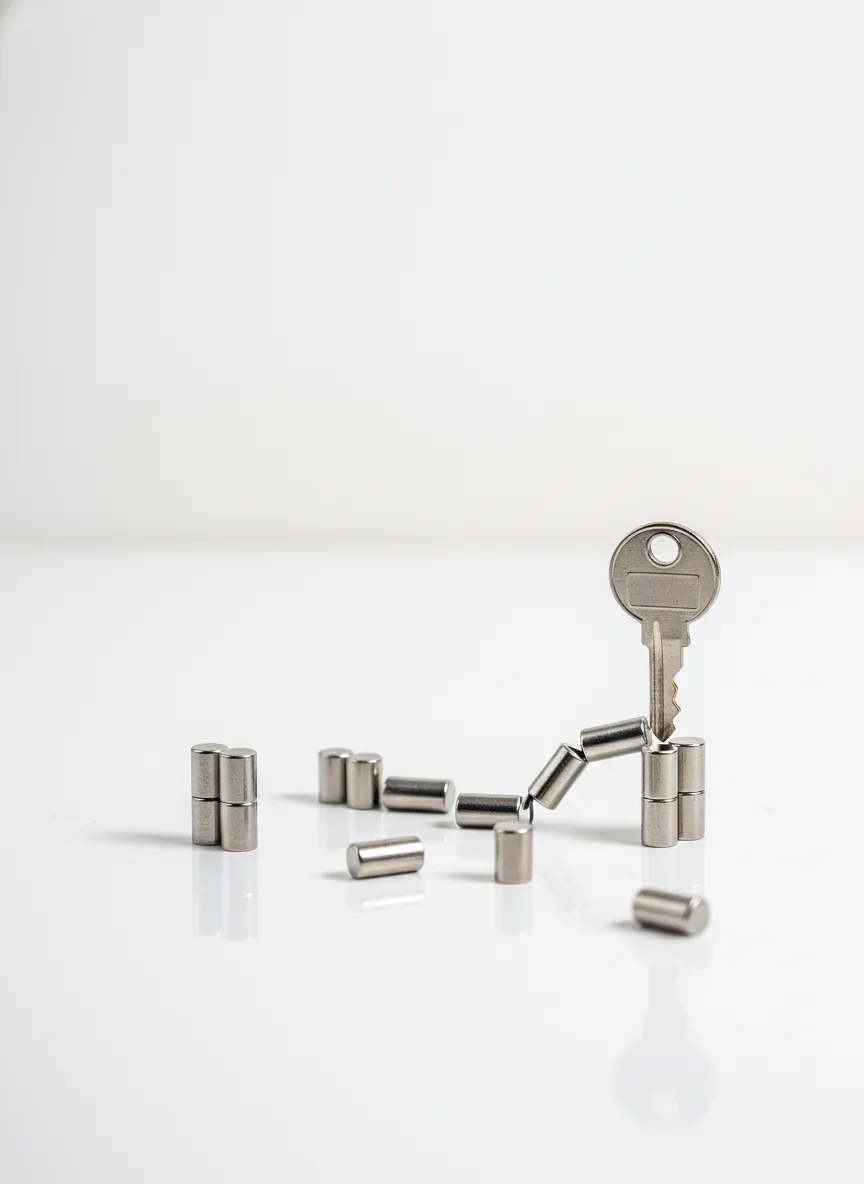
Small Neodymium Magnets Review: Are These Tiny Cylinder Magnets Actually Strong?
Small neodymium cylinder magnets reviewed: NdFeB rare-earth pull strength, triple Ni-Cu-Ni plating tested for 3D printing, Warhammer magnetizing & office organization.
Check Price on AmazonProduct Details & Features
Forget everything you know about standard refrigerator magnets. The weak, black, chalky discs that struggle to hold up a single utility bill are obsolete. You are looking at the pinnacle of modern magnetic technology: miniature neodymium cylinder magnets. These tiny, metallic powerhouses deliver an astonishing strength-to-size ratio, engineered specifically for creators, organizers, and professionals who demand industrial-grade holding power without the bulk.
Whether you are seeking to upgrade your home organization, magnetize delicate tabletop gaming figures, or streamline your office presentations, these ultra-compact rare-earth magnets are designed to permanently solve your fastening problems. Traditional ceramic ferrite craft magnets require massive surface areas to generate a fraction of the pull force that a single rare-earth cylinder produces. By leveraging a refined alloy of Neodymium, Iron, and Boron (NdFeB), these miniature cylinders transform any heavy duty refrigerator, dry erase glass whiteboard, or metal filing cabinet into an absolute fortress of organization.
If you have ever been frustrated by magnets that slide down metallic surfaces under the weight of a few sheets of paper, or if you need precision hardware for an intricate DIY project, these miniature marvels are the definitive upgrade. Step away from bulky N52 neodymium disc magnets that overpower delicate crafts, and step into the versatile, precision-engineered world of the neodymium cylinder.
Product Overview
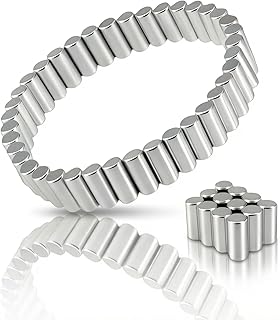
At first glance, it is almost difficult to believe that something this small can exert such a formidable force. Measuring just a few millimeters across, these cylinder magnets are precision-machined to exact tolerances. Unlike standard magnetic tape or flat squares, the cylindrical form factor is mathematically optimal for drilling, embedding, and stacking.
The core of these magnets consists of a high-grade NdFeB alloy. Because rare-earth metals are highly susceptible to oxidation and corrosion when exposed to ambient moisture, raw neodymium would quickly deteriorate and crumble. To prevent this, these miniature cylinders are encapsulated in a premium triple-layer plating process. This Ni-Cu-Ni (Nickel-Copper-Nickel) coating not only gives the magnets a brilliant, mirror-like silver finish but also significantly hardens the exterior, protecting the brittle magnetic core from shattering under high-velocity impacts.
When utilizing these magnets, precision is key. Because of their intense pull force, handling them requires a steady hand—often aided by a precision tweezers set. They are designed to bond seamlessly with adhesives like Gorilla two-part epoxy or Loctite super glue liquid, making them the perfect concealed fastener for any project where visual cleanliness is paramount.
Key Features & Benefits
Incredible Strength-to-Size Ratio
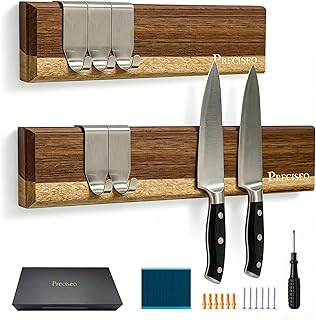
Do not let the minuscule dimensions deceive you. A single cylinder, often no larger than a grain of rice, can easily pin a dozen sheets of standard A4 paper to a metal surface. This dense magnetic flux allows you to achieve heavy-duty mounting in microscopic footprints. This means no more oversized plastic clips ruining the aesthetic of your kitchen. You can seamlessly mount magnetic spice tins or secure a stainless steel knife block by embedding these cylinders into wood, hiding the hardware entirely.
Premium Triple-Layer Coating
As mentioned, the Nickel-Copper-Nickel plating is not merely cosmetic.
- Nickel (Base Layer): Provides excellent adhesion to the raw NdFeB material and acts as the primary barrier against atmospheric moisture.
- Copper (Middle Layer): Acts as a shock absorber. Neodymium is notoriously brittle; the ductile copper layer helps distribute the kinetic energy when two magnets snap together violently, reducing the risk of chipping.
- Nickel (Top Layer): Delivers a smooth, frictionless, and highly reflective finish that resists scratching, prevents rust, and wipes clean effortlessly.
This triple-threat protection ensures your magnets survive the harsh environments of garages, kitchens, and workshops. Whether they are snapping onto metal wire shelving racks or locking tools onto a magnetic tool holder strip, they will not degrade or flake over time.
Unmatched Modularity
The true beauty of the cylindrical shape lies in its integration capabilities. If you are building a custom pegboard hooks system, modifying a metal tool chest, or creating a bespoke socket organizer tray, drilling a perfectly round hole is far easier than routing out a square recess. A standard drill bit matches the exact diameter of these magnets, allowing for a flush, friction-fit installation that looks professionally manufactured.
- Top Features at a Glance:
- Ultra-Compact Design: Fits into the tightest spaces where standard magnets cannot go.
- Permanent Magnetism: Retains its magnetic charge indefinitely under normal operating conditions.
- Axial Magnetization: The magnetic poles are on the flat ends of the cylinder, maximizing the pull force for surface-to-surface contact.
- High Thermal Tolerance: Capable of operating in environments up to 80°C (176°F) before experiencing any irreversible loss of magnetism.
Technical Specifications
Understanding the exact specifications of your hardware is critical for ensuring project success. Unlike cheap promotional magnets, these industrial-grade components offer measurable, reliable performance metrics. Use a digital precision calipers to verify your drill holes, and watch as these cylinders slot in perfectly.
| Feature | Detail | Check Price |
|---|---|---|
| Material | Sintered Neodymium-Iron-Boron (NdFeB) | Adhesive magnetic tape roll |
| Shape | Cylinder / Round / Rod | Heavy duty magnetic hooks |
| Grade | N35 (Optimal balance of strength and durability) | Countersunk hole magnets |
| Plating | Ni-Cu-Ni (Triple Layer Plated) | Gauss meter |
| Magnetization | Axially Magnetized (Poles on flat ends) | Magnetic levitation kit |
| Max Temp | 80°C / 176°F | N/A |

Unleashing the Potential: Real-World Applications
The true value of these miniature neodymium cylinder magnets becomes apparent the moment you put them to work. Their applications span from highly technical hobbies to everyday household problem-solving.
Miniature Magnetization and Tabletop Gaming
For the dedicated hobbyist, these magnets are nothing short of revolutionary. If you are building a Warhammer 40k starter set or prepping Dungeons and dragons miniatures, you know the pain of permanently gluing a specific weapon loadout to your model. By utilizing these tiny cylinders, you can fully magnetize your army.
The process is incredibly straightforward. Using a pin vise hand drill, you carefully bore a tiny hole into the shoulder joint of the miniature and the corresponding arm. Apply a micro-drop of cyanoacrylate glue, and press the magnet in flush. Repeat the process for the weapon arm, ensuring the polarities attract. Now, your single miniature can dynamically swap between a bolter, a plasma gun, or a chainsword on the fly.
To complete this process flawlessly, hobbyists often rely on a suite of tools. Army Painter green stuff is perfect for concealing any gaps around the magnet. Once assembled, standard Citadel miniature paints or Vallejo model color can be applied directly over the magnet, hiding it completely. Even the transportation of these delicate figures is revolutionized; gluing a magnet to the base of your figure allows you to transport them upright in a metal-lined miniature carrying case, ensuring your multi-hour paint job never chips against foam inserts.
And when you finally deploy your magnetized army onto a battle mat grid and roll your attacks into a premium dice rolling tray, you do so knowing your models are customized exactly to your strategic needs.
3D Printing and Advanced DIY Crafts
The 3D printing community has embraced the miniature neodymium cylinder as a core building material. Whether you are operating an Elegoo Mars resin 3D printer or an FDM machine running Anycubic PLA filament, incorporating magnets into your designs elevates them from static plastic chunks to functional mechanical assemblies.
Advanced users pause their prints mid-way, drop a tiny cylinder into a pre-designed internal void, and resume printing, permanently encapsulating the magnet inside the plastic. This technique is perfect for creating snap-fit enclosures, invisible hinges, or modular desk organizers.
Because resin printing requires meticulous post-processing, having your tools ready is crucial. After washing your prints in Isopropyl alcohol 99% and curing them in a UV curing station, you can use an X-Acto hobby knife to clear any tolerance issues before inserting your magnets. Always wear safety goggles and nitrile gloves when handling uncured resin and sharp tools. Working under a magnifying craft lamp ensures you never misalign the magnetic polarity—a mistake that is incredibly frustrating to fix once the epoxy resin kit sets! If you do make a mistake, a quick pass with a sandpaper assortment can help you dig out the error, but it is always best to measure twice and glue once.

Office Organization and Aesthetic Displays
Moving out of the workshop and into the office, the utility of these tiny cylinders remains unmatched. If you utilize a Quartet magnetic marker board for team meetings, standard magnets easily slide down when holding thick blueprints or multiple laminated sheets. A single neodymium cylinder locks documents in place with an aggressive snap.
Because they are so small, they do not obscure the text or imagery on your documents. They pair beautifully with modern office aesthetics, looking like sleek silver bullet points against your whiteboard. Keep a stack of them in your desk organizer tray next to your Expo dry erase markers, and you will never struggle with failing office supplies again.
For home decorators, these magnets are the secret behind “floating” artwork. By embedding magnets into the back of custom magnetic photo frames or wooden blocks, and placing corresponding magnets in the wall, you can achieve a completely seamless mounting system with zero visible hardware. This is vastly superior to the clumsy look of traditional cork bulletin board setups relying on plastic push pin magnets. You can even use them to secure small, lightweight floating shelves to metal fixtures or lock the door of a premium acrylic display case securely shut to protect your valuables from dust.
The Science of Neodymium: Why These Outperform Ferrite
To truly appreciate these miniature cylinder magnets, one must understand the metallurgical science that makes them possible. Neodymium magnets are a member of the Rare Earth magnet family, which are currently the strongest type of permanent magnets commercially available.
Standard black ceramic magnets rely on Iron Oxide (ferrite) mixed with strontium or barium. While highly resistant to corrosion and exceptionally cheap to manufacture, their magnetic anisotropy (the directional dependence of their magnetic properties) is relatively low. This is why you need a massive, heavy chunk of ceramic magnet to achieve a weak, sluggish pull.
Conversely, the NdFeB tetragonal crystal structure possesses exceptionally high uniaxial magnetocrystalline anisotropy. In simpler terms: the microscopic crystal structure of the metal heavily favors aligning its magnetic domains in one specific direction. This intense alignment generates a massive magnetic field relative to its volume. You can visually witness this intense flux by placing a piece of paper over the magnet and sprinkling iron filings for magnetism over it—the field lines will leap into sharp, rigid formation instantly.
The trade-off for this extreme power is the Curie temperature constraint. Neodymium magnets will permanently lose a portion of their magnetic charge if heated beyond their maximum operating temperature (typically 80°C / 176°F for N35 grade). Therefore, while they are perfect for room-temperature applications, do not use them to attach heat shields to exhausts or mount items directly to actively heating engine blocks.
Safety and Handling Guidelines
With great power comes the necessity for responsible handling. Because these magnets are so small, the immediate danger is less about crushing fingers (a genuine risk with larger neodymium blocks) and more about the risk of ingestion.
CRITICAL WARNING: These miniature magnets are absolutely not toys. If multiple high-powered magnets are swallowed, they can attract to one another across the walls of the intestines, causing severe, life-threatening injuries. They must be kept strictly away from children and pets.
Furthermore, despite the protective triple-layer plating, the NdFeB material inside is crystalline and brittle. If you allow two of these magnets to jump together from a distance of several inches, the sheer velocity and impact force can cause the nickel plating to fracture and the magnet to shatter, potentially sending sharp metallic shards flying. Always slide magnets apart laterally, rather than trying to pull them straight off each other. When bringing them together, maintain a firm grip and let them connect slowly and deliberately.

Pros & Cons
No product is completely flawless in every conceivable scenario. Here is a transparent breakdown of where these miniature neodymium cylinder magnets excel, and where you might need to adjust your expectations.
Pros:
- Massive Pull Force: Unrivaled strength-to-size ratio; easily outperforms magnets five times their size.
- Sleek Aesthetic: The silver Ni-Cu-Ni plating looks professional, clean, and modern.
- Perfect Modularity: The cylindrical shape makes drilling precision mounting holes effortless for DIYers.
- Cost-Effective Bulk: Usually sold in large packs, providing immense value for mass-magnetization projects.
- Discreet: Tiny enough to remain completely hidden in crafts, miniatures, and displays.
Cons:
- Brittle Nature: Will chip or shatter if allowed to snap together violently.
- Hard to Handle: Their small size combined with intense strength makes them difficult to separate without fingernails or specialized tools.
- Temperature Sensitive: Cannot be used in high-heat environments (ovens, engines) without losing magnetism.
- Severe Ingestion Hazard: Must be rigorously managed to keep away from children.
Expert Verdict
“In the realm of DIY crafting, 3D printing, and high-end organization, miniature neodymium cylinders are the undisputed heavyweight champions of the microscopic world. Their ability to deliver structural-grade fastening in a footprint no larger than a peppercorn opens up design possibilities that simply did not exist a decade ago. While they demand respect during handling due to their brittle nature and intense pull, the triple-layer plating ensures longevity and reliable performance. If you are still relying on weak, bulky ceramic magnets, upgrading to these rare-earth cylinders will fundamentally change how you approach your projects.”
The Bottom Line
You do not need to compromise between aesthetic cleanliness and holding power. These miniature neodymium cylinder magnets provide the ultimate solution for anyone looking to secure, mount, or organize with precision. Whether you are a tabletop gamer magnetizing an army, a 3D printing enthusiast designing modular parts, or simply someone who wants their whiteboard to actually hold onto important documents, these magnets deliver uncompromising performance.
Stop settling for frustrating, weak fasteners. Upgrade your toolkit today with hardware that genuinely works.
Frequently Asked Questions (FAQ)
Why are neodymium cylinder magnets stronger than ceramic ferrite magnets?
Neodymium (NdFeB) magnets have a maximum energy product (BHmax) that is up to 10× greater than standard strontium-ferrite ceramic magnets. The tetragonal crystal structure of the NdFeB alloy aligns magnetic domains with extreme precision in one direction, producing a far denser magnetic flux per unit volume. A 5mm neodymium cylinder can therefore exert the same holding force as a 25mm ceramic disc, making rare-earth magnets the decisive choice for space-constrained or aesthetic applications.
How do I use small neodymium cylinder magnets for office whiteboard organization?
Place the cylinder flat-face-down on any ferrous whiteboard or steel-backed glass board. Your documents will stay put without sliding. For glass whiteboards (which have a steel backing plate), choose magnets with a higher pull force (N42+) to ensure the field penetrates the glass thickness. Because these magnets are so small, multiple documents can be held simultaneously without obscuring text, keeping your whiteboard clean and readable.
Can you use small neodymium magnets outdoors or in humid environments?
Small neodymium cylinder magnets with a triple Ni-Cu-Ni coating are highly resistant to everyday indoor moisture. For outdoor or high-humidity environments (garages, sheds, kitchens near steam), the plating provides adequate protection for most use cases. For prolonged direct water exposure, seal the magnet in a thin coat of clear epoxy resin or two-part polyurethane to prevent eventual corrosion at any microscopic scratches in the plating.
Are small neodymium cylinder magnets safe to use around smartphones?
Modern smartphones use solid-state (NAND flash) storage, which is not affected by magnetic fields. However, very strong magnets placed directly against the camera sensors can temporarily distort photos. Additionally, some iPhone MagSafe and Android Qi wireless charging alignments can be disrupted. Keep small magnets at least 2–3cm from camera lenses, and avoid leaving strong magnet clusters on top of any device. Credit cards with magnetic strips should always be kept away from neodymium magnets.