Best Magnetic Welding Holders: Angles and Arrow Squares
Reviewing the best magnetic welding holders and squares. Hold steel plates at 45, 90, and 135 degrees for flawless fabrication and DIY welding projects.
Check Price on AmazonProduct Details & Features
Woodworkers have clamps, but metal fabricators have magnets. When you are welding steel tubing, sheets, or angle iron, holding the pieces in alignment while juggling a welding torch and filler rod is practically impossible without an extra set of hands. Standard clamps are slow to adjust, can warp under extreme heat, and are difficult to fit into tight corners.
This is why magnetic welding holders—commonly known as welding arrows or magnetic squares—are an absolute necessity in any metal fabrication workshop.
By utilizing powerful, heat-resistant magnets encased in a durable steel casing, these arrow-shaped tools hold steel pieces firmly at precise angles (usually 45, 90, and 135 degrees). This allows you to tack-weld your joints with absolute precision before completing the final bead.
However, choosing the wrong welding magnet can ruin your welds. Cheap magnets demagnetize under the high temperatures of a welding arc, while magnets with weak holding force allow the metal to pull out of square as it cools and shrinks.
In this comprehensive review, we evaluate the design, holding capacities, heat resistance, and best practices for using the best magnetic welding holders on the market.
Product Overview: The Anatomy of a Welding Arrow
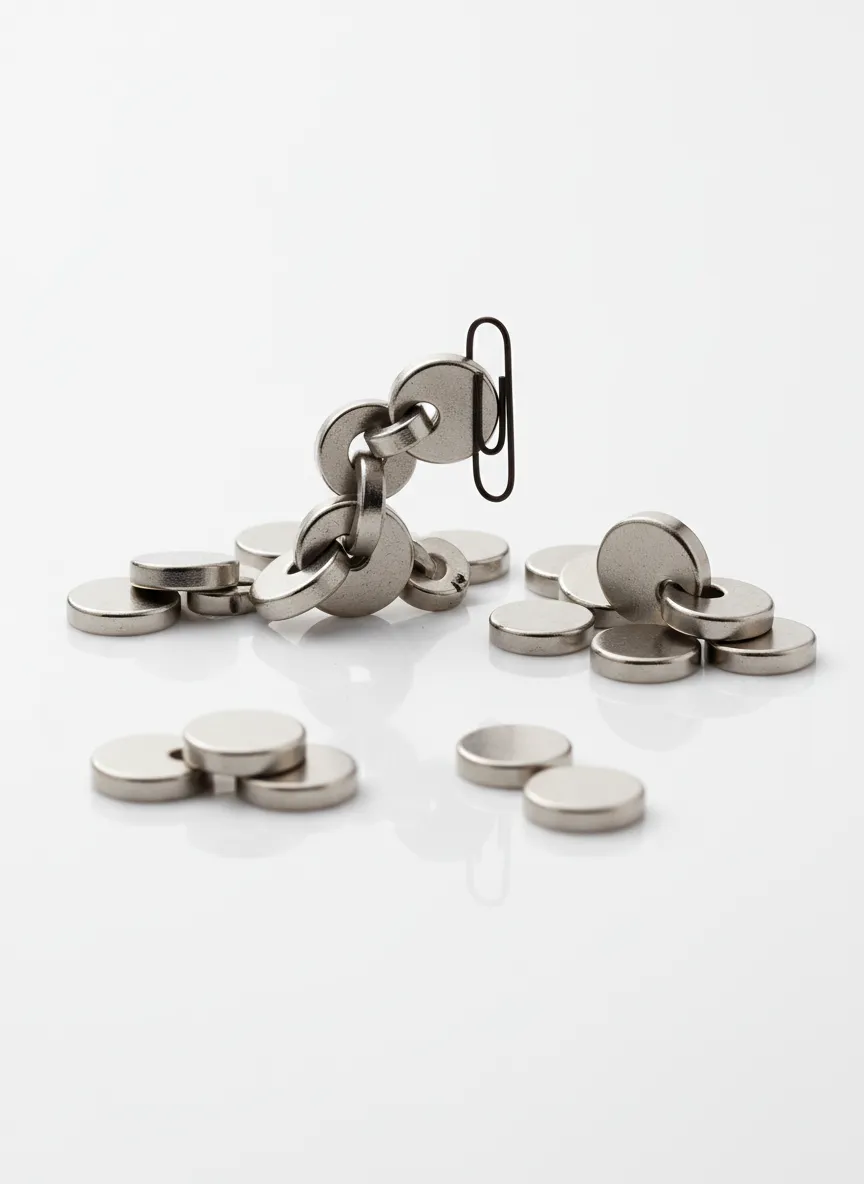
A magnetic welding holder consists of a thick permanent magnet (typically ferrite due to its superior heat resistance compared to neodymium) sandwiched between two heavy-duty steel plates. The plates are riveted together, creating a rugged assembly designed to survive drops, sparks, and high heat.
The geometric shape of the outer steel plates defines the angles you can hold:
- The 90-Degree Corner: Used for holding frames, boxes, and brackets square.
- The 45-Degree Miter: Essential for holding mitered corners on square tubing.
- The 135-Degree Miter: Perfect for constructing octagonal frames or custom angled brackets.
Most welding magnets feature a central hole. This hole is not just a finger grip; it allows you to hook a chain or insert a rod to easily pull the powerful magnet off the steel when you are finished.
Key Features & Benefits
To get the most out of your metalworking, look for magnetic holders with the following characteristics.
Top Features
- Fixed Multi-Angle Geometry: Arrow designs offer 45, 90, and 135-degree angles, while hexagonal variations add 30, 60, and 75-degree capability.
- Rugged Steel Casing: Red powder-coated steel plates shield the inner magnet from direct spatter and physical impact.
- High Holding Capacities: Available in sizes ranging from 25 lbs to 75 lbs of holding force, accommodating thin sheet metal and thick structural beams alike.
- Central Release Hole: Allows you to leverage a tool or hook to break the magnetic connection easily.
Neodymium vs. Ferrite in Welding (Heat Sensitivity)
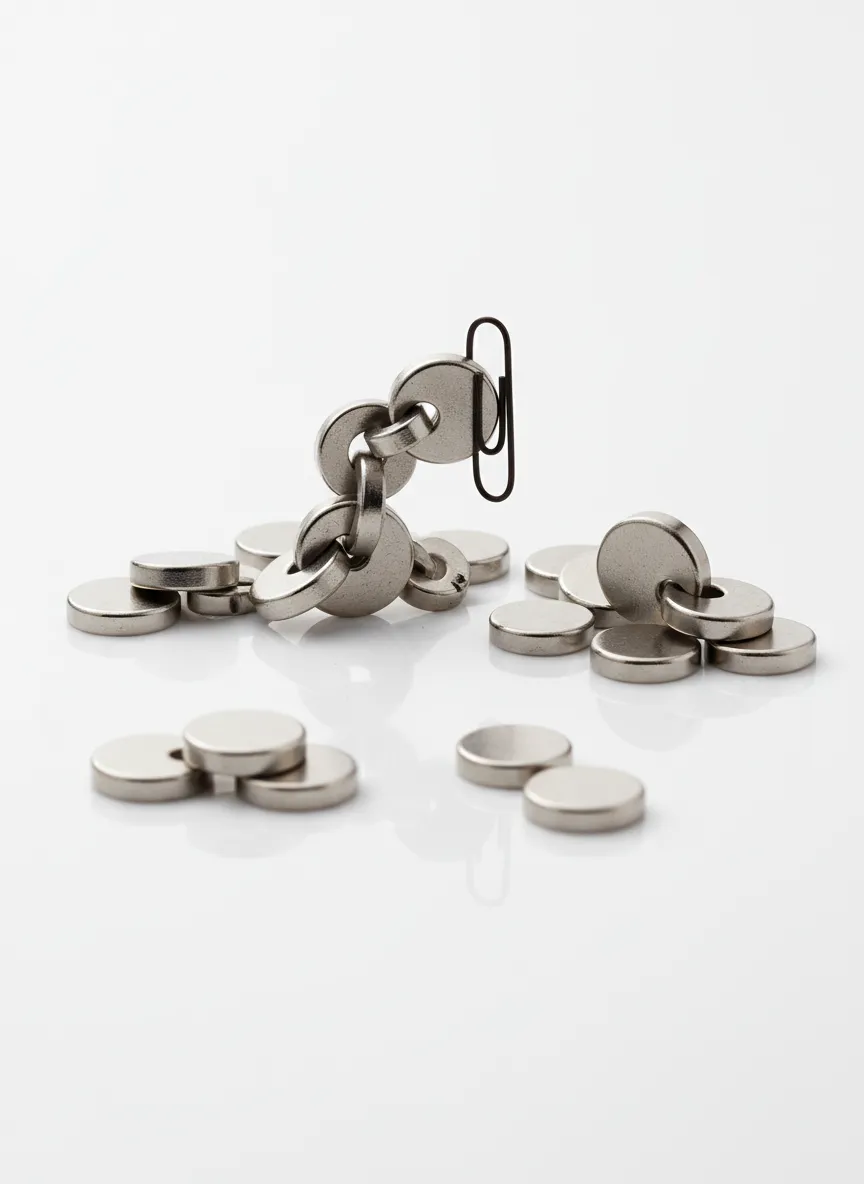
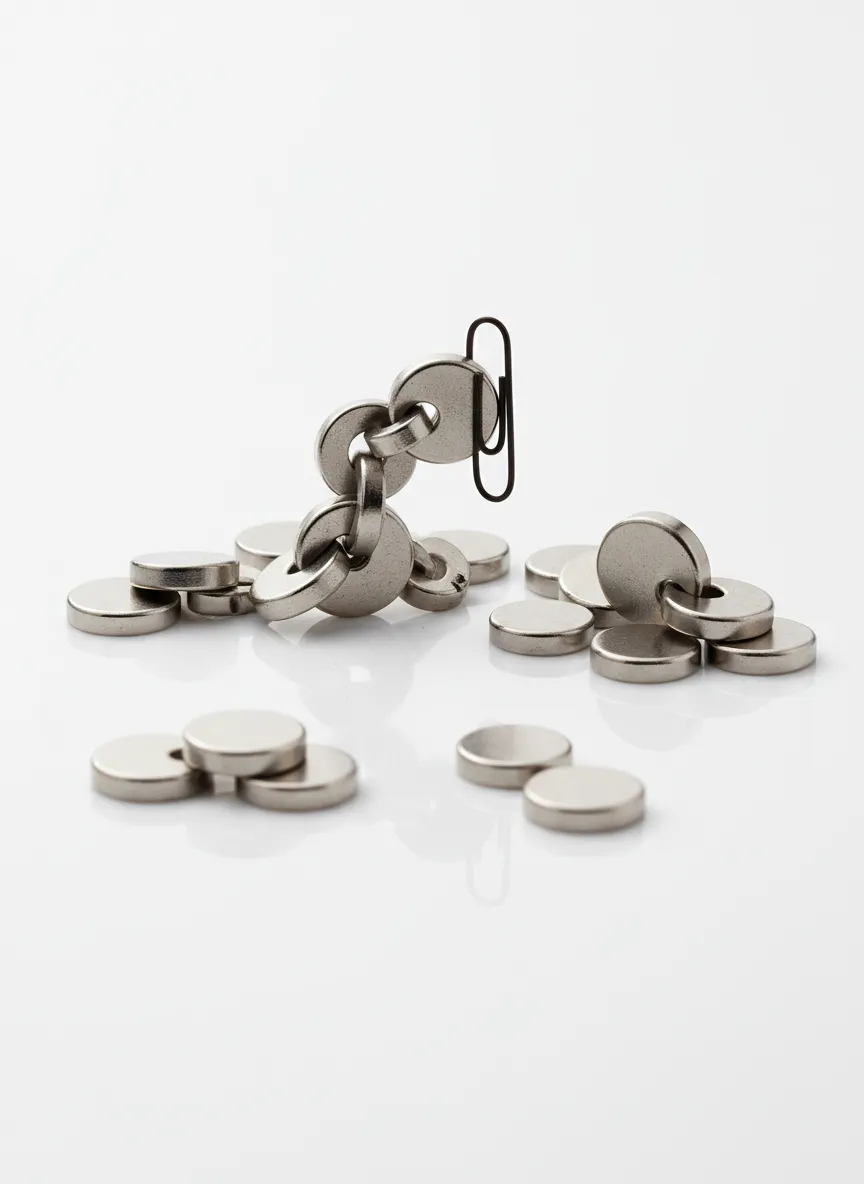
While neodymium magnets are the king of raw pull force in miniature formats, ferrite (ceramic) magnets are the industry standard for welding.
- Neodymium’s Weakness (Heat): Neodymium magnets are highly sensitive to heat. Standard neodymium begins to lose its magnetic strength permanently at just 80°C (176°F). If you place a neodymium magnet close to a welding joint, the heat of the arc will instantly demagnetize it, rendering the tool useless.
- Ferrite’s Strength (High Temp): Ferrite magnets can withstand temperatures up to 250°C (482°F) before losing their charge. This allows you to place the welding arrow directly adjacent to the weld zone without damaging the magnetic holding force.
For heavy fabrication or high-amperage welding, specialized switchable welding magnets (Alnico or Samarium Cobalt) are sometimes used, but for DIYers and standard shop work, ferrite-core steel arrow magnets are the best value.
How to Weld Square Using Magnetic Holders
Using magnetic squares is straightforward, but following these steps ensures maximum accuracy and tool longevity.
Step 1: Clean the Contact Surfaces
Before setting up, wipe down the steel pieces and the magnetic holder. Metal filings, slag, and rust will stick to the magnet, creating a gap. A gap of just 1mm can reduce the magnet’s holding force by over 50% and throw your angle out of square.
Step 2: Set the Angle and Tack Weld
Place the magnetic arrow inside the corner of your joint to hold the steel pieces at the desired angle. Double-check the alignment using a machinist’s square. Once aligned, place small tack welds at the outer corners.
Step 3: Remove the Magnet Before the Final Pass (Crucial Step!)
Always remove the magnetic holder before laying down your final continuous weld bead. There are two reasons for this:
- Arc Blow: The powerful magnetic field of the holder can warp the electrical path of your welding arc (especially in MIG or TIG welding), blowing the weld puddle away from the joint and causing porosity and weak welds.
- Heat Damage: While ferrite is heat-resistant, the extreme heat of a continuous weld bead can exceed its thermal limit if left in direct contact.
Remove the magnet with a firm twist or pull using the center hole, then finish the weld bead.
Technical Specifications & Size Guide
Match the magnet size to your metal stock to prevent sagging:
| Magnet Size | Weight Capacity | Best Used For | Complementary Tools |
|---|---|---|---|
| Small (3”) | 25 lbs | Sheet metal, small brackets, thin wire frames | Chipping Hammer |
| Medium (4”) | 50 lbs | 1” to 2” square tubing, light angle iron | Welding Clamps |
| Large (5”) | 75 lbs | Heavy structural steel, thick plates, large frames | Angle Grinder |
Pros & Cons
Pros:
- Hands-Free Setup: Acts as an extra hand to hold parts, making solo welding easy.
- Precise Angles: Holds exact 45, 90, and 135-degree corners.
- Extremely Durable: Enclosed steel casing resists spatter, sparks, and rough drops.
- Low Cost: Ferrite magnets are inexpensive, making bulk shop packs highly affordable.
Cons:
- Collects Metal Filings: Steel dust sticks to the magnet and requires constant wiping.
- Causes Arc Blow: Must be removed before laying down final weld beads to prevent arc deflection.
Expert Verdict
“A set of magnetic welding arrows is the single best investment a beginner welder or metal fabricator can make. They make squaring up square tubing frames incredibly fast and simple. Opt for a multi-pack containing 4-5 magnets so you can square up all four corners of a frame simultaneously.”
The Bottom Line
Achieve perfect, square welds every time. Magnetic welding holders are the ultimate workshop accessory for metal fabricators and DIY welders alike.
Equip your workshop today and order a set of heavy-duty welding magnets!
Frequently Asked Questions (FAQ)
How do I clean metal shavings off my welding magnets?
Because welding magnets are constantly exposed to metal grindings and filings, they will collect a layer of steel dust. To clean them, wipe the magnet firmly with a thick shop rag or use a pressurized blow gun attached to an air compressor. Some fabricators use a stronger magnet wrapped in a plastic bag to “pull” the dust off the welding magnet, then discard the bag.
What is arc blow and how do welding magnets cause it?
Arc blow occurs when the magnetic field of a welding holder deflects the electrical current of the welding arc. This causes the arc to wander, splatter violently, and pull away from the joint, resulting in poor penetration and structural defects. To prevent this, always tack-weld your joints with the magnet in place, then remove the magnet before running your final weld beads.
Can I use these magnets for soldering or brazing?
Yes! Magnetic squares work excellently for holding copper pipes, brass fittings, and jewelry components during soldering and brazing. Since brazing involves lower temperatures than welding, the magnets will easily survive the heat, but avoid pointing the direct flame of your propane torch onto the magnet.
What size welding magnet do I need for square tubing?
For standard 1” to 2” square tubing (commonly used for tables, carts, and brackets), a medium 4-inch (50 lb rating) welding magnet is ideal. It provides enough surface area to hold the tubing straight without being too bulky. For heavy-duty projects like trailer frames or structural beams, upgrade to 5-inch (75 lb) magnets.